The term 'modernity' refers to the period of time. The term 'modernism' refers to the artistic response to this time, however, the response can affect the culture of period.
Modernism is said to have begun in 1863 but modernity is harder to date. The period can be defined by certain characteristics:
- progress
- secularism
- science
- democracy
- industry
- capitalism
Society became more open to change as the onset of capitalism created a richer middle class. In the 1840s, artists began to show ordinary life for the first time which was extremely radical at the time.
Éduoard Manet:
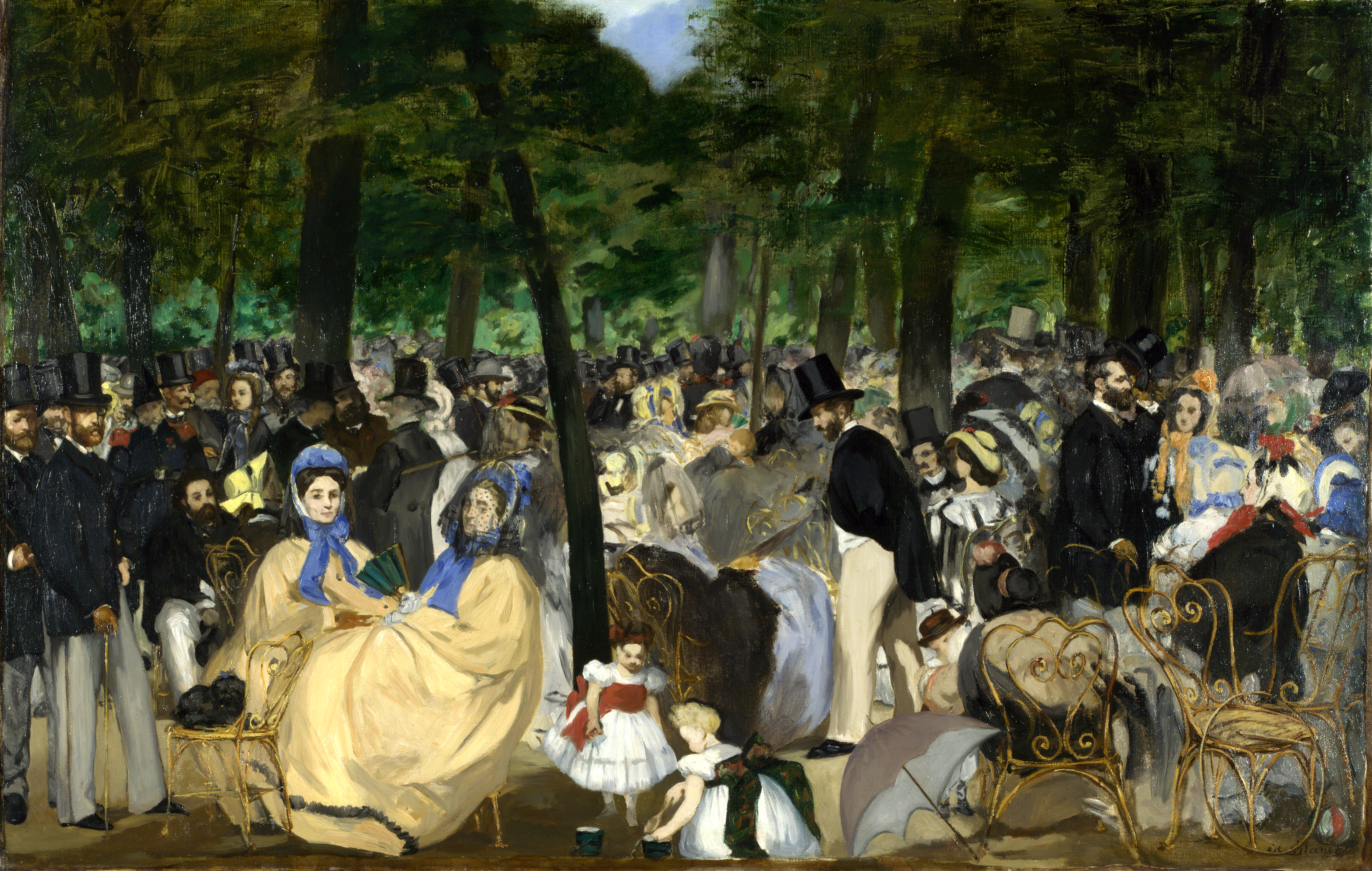 |
| Music in the Tuileries |
This painting by Manet shows the day to day life of relatively ordinary people, something highly unusual for the time. However,the techniques used in the painting were also out of the ordinary. The trees are painted in an odd way that makes them all blend together but strangest of all is the 'explosion' in the centre of the painting. This shows that Manet was already beginning to experiment with new forms of painting. This 'explosion' is not a depiction of subject matter but something odd which Manet chose to add in himself.

Olympia
This painting is viewed as the beginning of modernism because of it's flatness. Art used to be a window into another world however instead of looking 'through' this window, the flatness forces you to look 'at' it. There are some highly detailed, skillfully painted areas in the painting such as the serving girl's face or the patterned blanket. However, the nude's hair blends with the background and the cat in the corner is very badly painted. This was deliberately done, not because of a lack of skill but because the artist wished to draw attention to the canvas itself.
The painting is also making a social commentary. The model in question was a prostitute and her direct gaze casts the viewer as one of her clients. This scandalised conservatives in Paris, despite the fact that prostitutes were an accepted but hidden part of life in the city. The model's challenging stare is a protest against this hyprocrisy.
This was the beginning of Impressionism, a modern movement that believed that art should reflect the progress in the world around, therefore it was constantly changing. According to Greenberg, the "logical conclusion" of the line of painting begun by Manet was Jackson Pollock's Full Fathom 5, as it was totally flat, with no actual subject.
In the '60s, artists became tired of the dogmatic insistence that modernism should constantly change and began experiment in a more playful fashion, beginning the post-modernist movement.

No comments:
Post a Comment